Scalp scar camouflage uses cosmetic pigment impressions to reduce the visual contrast between a scar and surrounding hair or scalp. At SMP INK Seattle, this includes assessment of FUE and FUT hair transplant scars. Pigment can change how a scar looks; it does not remove scar tissue, change its texture or guarantee invisibility.
Candidacy and limitations
Existing hair, scar color, texture and pigment response affect how naturally a treated area may blend. Some scars retain pigment differently from surrounding skin, and a result may still be noticeable under certain lighting or with a different haircut. Suitability and expectations are reviewed individually rather than promised from a photo.
Small scar treatments and extensive cases are quoted individually after consultation. This is different from the typical full scalp treatment plan. See scalp SMP options and pricing, browse our scar results or ask about your own scar.
FUE and FUT scar patterns
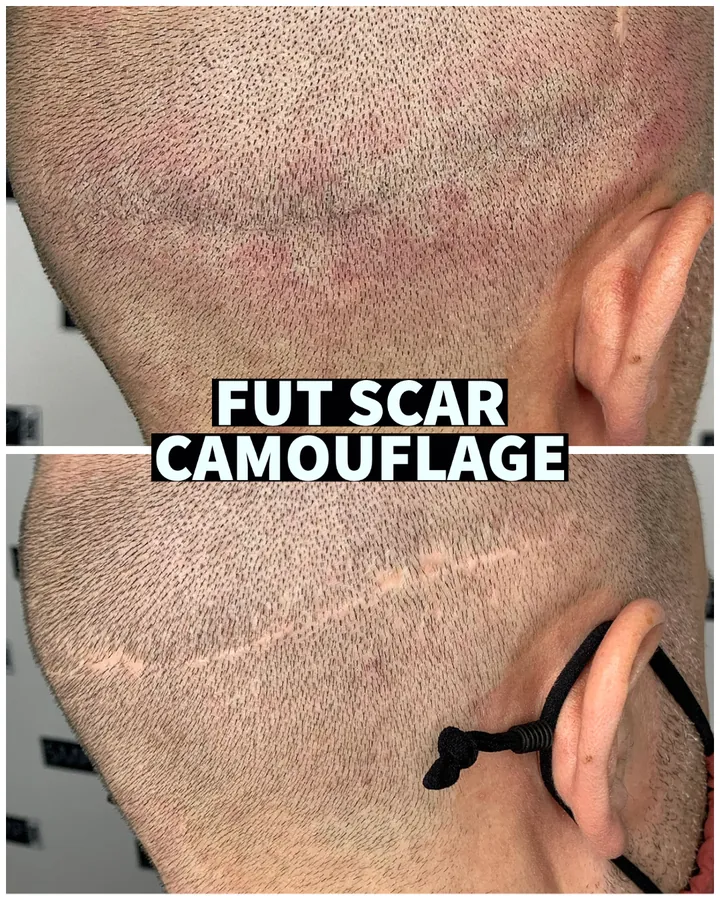
FUT, often called the strip method, can leave a linear donor-area scar. FUE removes follicles individually and can leave dot-like donor-area marks. Neither label alone tells us how your scar will look or respond to pigmentation. A consultation focuses on the actual area, surrounding coverage and realistic blending options.
Hair Transplant Scars
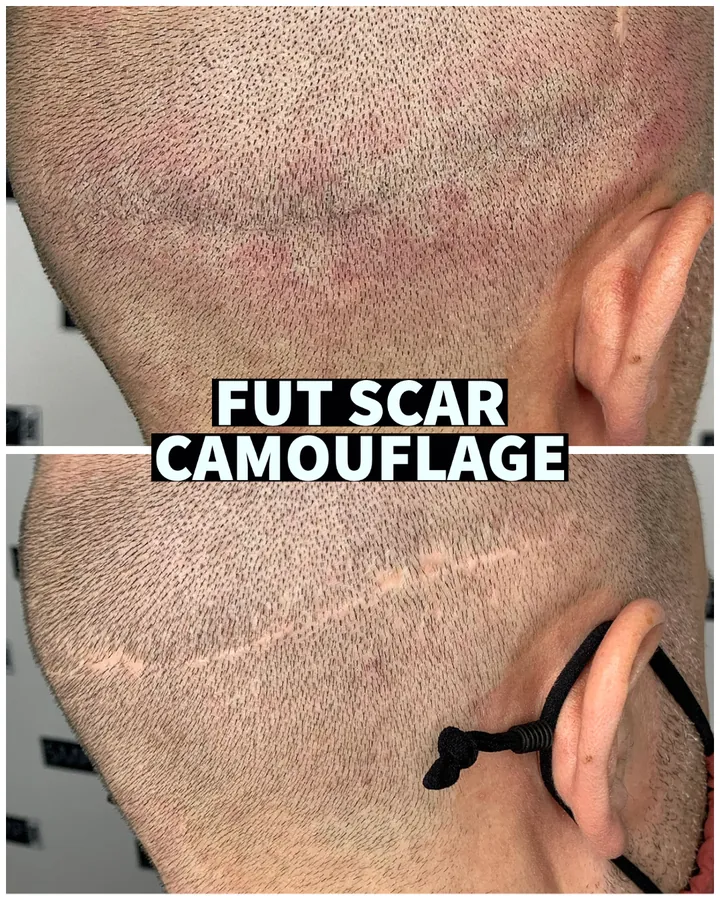
Many people who undergo hair transplant surgery have scars at the back of their scalp due to parts of the scalp being surgically removed from the donor area. This is especially true during FUT (Follicular Unit Transplantation) transplants, also known as the strip method. During a hair transplant, healthy hair follicles are cut into strips from a donor area, typically at the back of the scalp.
These strips are then transplanted to the balding or thinning areas. However, this process can result in a massive scar left on the back of the client's scalp. These scars are known as FUT strip scars and may appear lighter than surrounding skin. These scars are an unfortunate part of hair transplants since the whole reason for getting a transplant is usually to improve the look of your scalp in the first place.
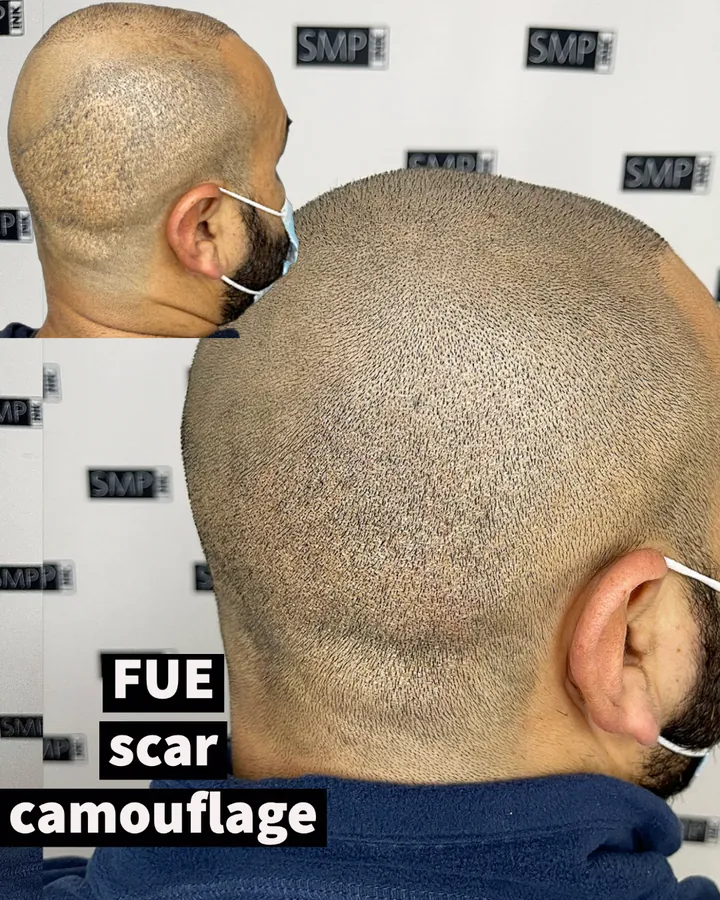
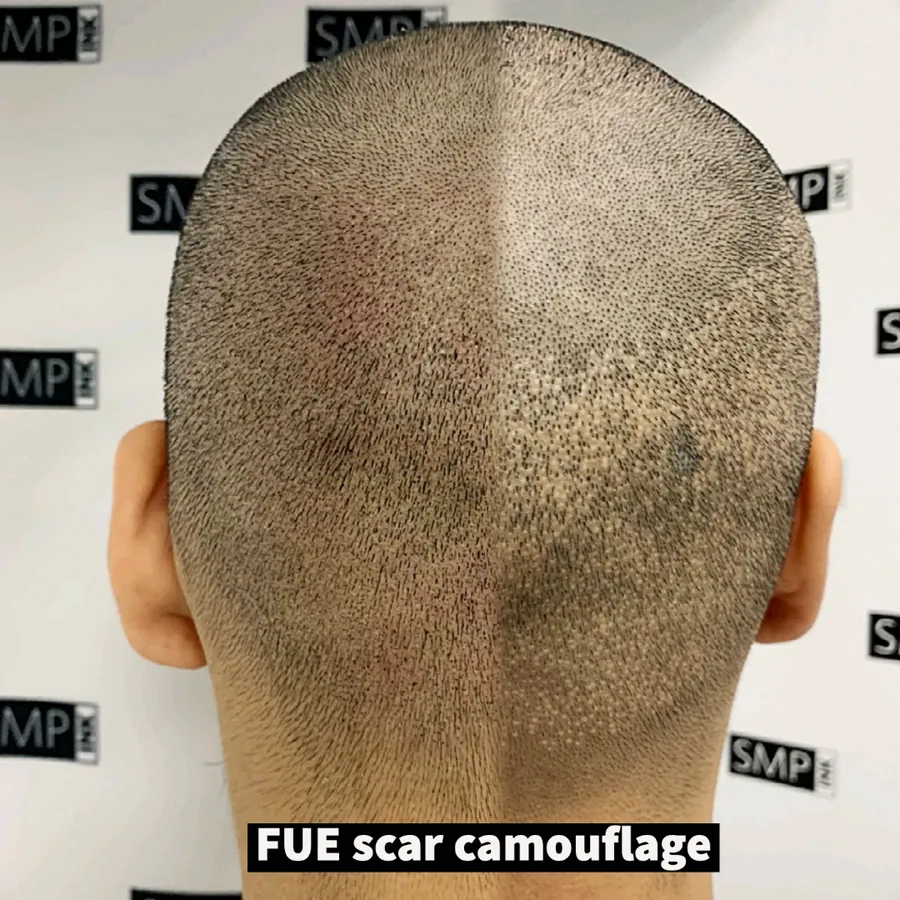
The other type of hair transplant is FUE (Follicular Unit Extraction). FUE transplants are marketed as scarless, but that's not always true. The FUE transplants process involves hair follicles being removed one by one from the donor area and moved to the transplant area. It's slightly less invasive and less painful than the FUT or strip method since no scalpels, sutures, or staples are utilized. However, when done improperly, visible lines can be left on the back of clients' heads. These scars run along the back of a client's scalp, which may not be visible to the client but can easily be seen by others. These lines can often be seen even through the hair.
Washington's Scar Camouflage Experts
At SMP INK, our SMP technicians carefully camouflage these unsightly scars by matching hair follicles to the surrounding areas. This allows the area to be covered up by pigment that looks identical to the hair follicles already on your scalp. Contact us for more information about scar camouflage services.
The same pigment-matching technique also works on facial scarring within a beard area — see our beard micropigmentation service.